
'Our Indian culture system is very family oriented.' 'We value and respect the decisions of our parents to a great extent.' 'That can be a pro or con.' 'It's up to the parents to gauge how much motivation, pressure or space a child needs.' 'Every child is different.' 'We are all unique and that is what I intend to drive home to parents.'
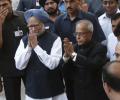
Manmohan Singh, reveals the former President, was keen that either P Chidambaram or Montek Singh Ahluwalia be the finance minister.

'How can middlemen disappear as long as our political parties are sucking in massive amounts of black money?' 'There is an old political art well practised in New Delhi -- people create artificial problems and then solve it for you to earn your gratitude for a lifetime.'

Here is the full transcript of Congress vice president and Lok Sabha poll campaign chief Rahul Gandhi's first formal TV interview with Times Now Editor-In-Chief Arnab Goswami.

Govt is keen to push reforms in the insurance sector.

Hence, the claims by the Government that this will end the menace of black money and corruption are simply outlandish. Also, the simultaneous introduction of Rs 2,000 note undermines their claim and it simply does not fit the storyline of an attack on black money and corruption.

More, many market gurus expect the Sensex to reach 30,000 levels by December and 40,000-45,000 in three to four years.

This is the first time the fight is between mother and son. Both sides don't look in the mood to relent: Advisors and spin doctors have been hired, lawyers have been consulted.
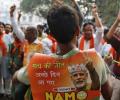
'Success will require political skill, not just economic expertise'

Buffalo meat was on Wednesday back on the menu of the Kerala House in New Delhi and was lapped up by the lunch-time crowd as the items that were briefly discontinued following a row that saw police carry out a raid at the canteen were sold out within "45 minutes".
One cannot but infer that this brouhaha is a crafty ploy to create an issue out of a non-issue. An overview of post-independent India's history reveals that it is not the BJP or the Sangh Parivar but Marxist historians who have been guilty of debasing history to suit their vested interests, says Vivek Gumaste.

The ordinance has returned near absolute power of discretion in land acquisition, except in tribal areas, into the hands of the bureaucracy yet again
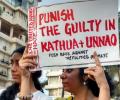
'They have no other agenda, but to perpetuate hate.' 'They have destroyed the economy and polity and they survive only on hate.' 'They think through hatred, they can mobilise the large chunk of Hindu votes.'

A summary of sports events and sports persons, who made news on Tuesday

'...even if they have profound differences. We discuss within our party and with each other, but not openly. We just reminded the BJP that they too, should follow this dharma.'

The positivity over Narendra Modi's election speech in Jammu is unanimous, but it comes with guarded optimism as many would like to wait and watch to see how the new government actually manages the 25-year-old issue, says Upasna Pandey

India has never sought Dawood's extradition, the Pak high commissioner has said.
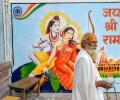
More than 25 years after the Babri Masjid was destroyed, another generation proclaims its commitment to building a Ram temple.

'As the first leaders of their respective countries born after Indian Independence and the Chinese Liberation, Modi and Xi would be expected to have the ability to overcome the traditional mindsets and the hierarchical nature of their official/bureaucratic establishments,' say Alka Acharya and Jabin T Jacob.
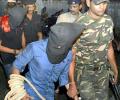
'Counter terrorism does not appear to be good guys fighting the bad ones; it is about people being picked up, detained and charged with crimes they did not commit.'

We suffered worse political degradation during the Emergency. But we emerged resurgent and vigorous because the spirit was not broken. This time around, we face an imminent threat to it, says Shreekant Sambrani

On the occasion of the Narendra Modi government completing one year in office, Sheela Bhatt/Rediff.com speaks to BJP president Amit Shah who is yin to Modi's yang. Don't miss it!

'I have to fight to ensure something like this doesn't happen to any other child, that no other parent faces what we are going through.' 'That is how I will find strength.'

The wars of the future will be fought over water and if they occur on large scale, will be far more devastating than any we have seen yet.

After recognising its adverse health effects, the govt has now dismissed its own lab reports to conclude that the evidence against plastic is insufficient.

'Jaish aided by LeT attacked Parliament knowing mobilisation of Indian military assets would be the consequence.' 'That mobilisation happened, necessitating a military response from Musharraf who moved troops guarding back doors out of Tora Bora, facilitating Osama's escape.'

Incidents of arson, firing and vandalism were reported from Madhya Pradesh, Rajasthan, Uttar Pradesh, Bihar and Punjab as protesters agitated against the dilution of the SC/ST Act.

Once these banks start showing losses, they will not be able to pay dividends to the government nor pay taxes, which will further aggravate the situation for the government as its return on investment as an investor would be very negligible for the next few years, says M V Subramanian.

While China is bigger and feels mightier at the moment, Beijing's rulers would be well advised not to be tempted to provoke India, for that would only trigger a chain reaction around the world that would not serve anyone's interests, says Sanjaya Baru.

There are conflicting signs on India's investment cycle.

The media wittingly or otherwise has been a key player in stymying the AAP. It is not so much the rivals, but the media, mostly the television and from its cues, large sections of the print segment, who got the trophy. The political parties, especially BJP and Congress, can now laugh in their sleeves, says Mahesh Vijapurkar.

'I had to convince myself that I was steely enough to operate on a cold-blooded killer.' 'For all my medical experience, this was something I had never done!' 'If something happened to Charles, I knew my fate was sealed for me.' 'I would be called Doctor Death until I breathed my last.' 'Success was my only hope of escaping that fate.' A fascinating excerpt from heart surgeon Dr Raamesh Koirala's Charles Sobhraj, Inside The Heart Of The Bikini Killer.

'Those who have seen the functioning of the Modi government in Gujarat know that the issues related to Hindutva and issues of economy and growth function simultaneously.' 'Modi's politics are based on the understanding of the middle-class consumer society which is in pursuit of material aspirations.' Sheela Bhatt/Rediff.com reveals the Modi government's economic and political plans for the year ahead.

A week after taking office, Arvind Kejriwal and his ministers have ambitious promises to keep.

The sluggish legal system in India makes it extremely difficult for law-enforcing agencies in the ministry of finance to punish violations of foreign exchange laws. Unfortunately, it is not just FEMA. The Prevention of Money Laundering Act too has significant infirmities, say Paranjoy Guha Thakurta and Pranati Mehra.

ISRO's expedition to Mars is yet another breathtaking adventure for an organisation created by Dr Vikram Sarabhai and carefully nurtured by scientists like A P J Abdul Kalam and R Aravamudan.

'You want a steady, confident, self-assured and highly skilful hand at the till. 'It is a pity that the BJP has decided to deprive itself of such a hand at this politically sensitive time.' 'It is like sacking your surgeon in the middle of your brain surgery,' says S Muralidharan.

What is the road ahead for Rahul Gandhi? Shehzad Poonawalla offers a blueprint.
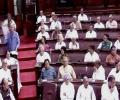
The AgustaWestland issue was fiercely debated in the Rajya Sabha on Wednesday with members of the Bharatiya Janata Party and Congress blaming each other.

Transport Minister Nitin Gadkari puts them out of the ambit of Motor Vehicles Act; experts say some regulation, licensing and driver training will be necessary
